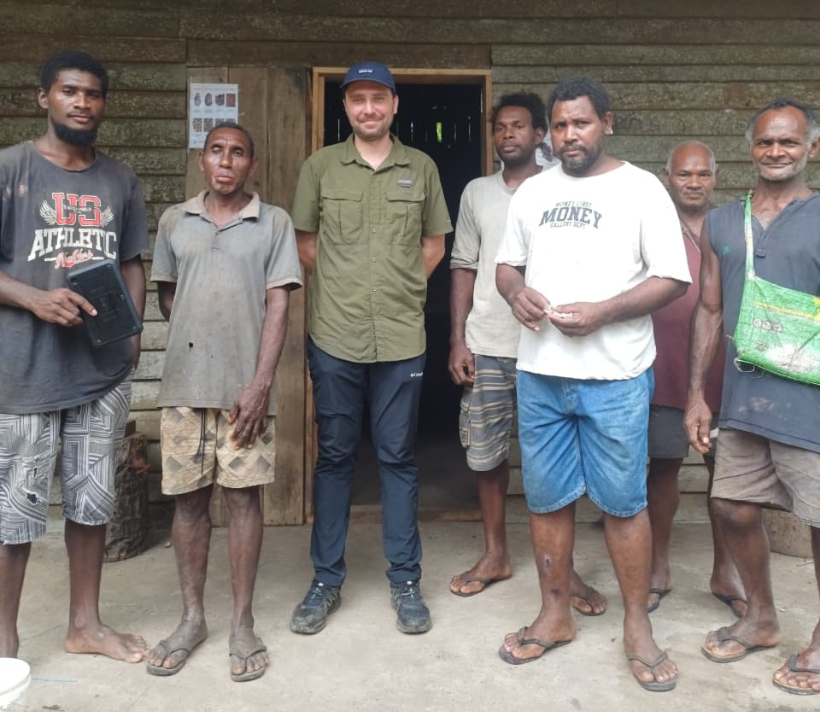
Quality starts in the Farm (Part 1): How Four Extension Officers Are Strengthening Rural Livelihoods and Product Quality in Solomon Islands
Extension Officers connecting KOSI with farmers and processors
At Kokonut Pacific Solomon Islands Ltd, quality begins long before our products reach the factory. It starts with the farmers, the processors and the communities behind every bean and every drop of oil.
Bringing Opportunities Closer to Rural Communities
Creating jobs in rural Solomon Islands is possible. At Kokonut Pacific Solomon Islands Ltd (KOSI), our four extension officers are demonstrating what this looks like in practice.
With two extension officers based in Auki, Malaita Province, and two in Kirakira, Makira-Ulawa Province, KOSI is taking an important step towards strengthening relationships with farmers and processors in the communities where our raw materials originate.
Their presence in these locations is more than a way of extending our operations beyond Honiara. It represents our commitment to working directly with farmers, supporting local production, improving product quality and creating opportunities in rural communities.
KOSI works with more than 1,000 cocoa and coconut farmers and processors across Solomon Islands. Connecting with these communities requires more than purchasing raw materials. It requires regular communication, training, monitoring, registration and, most importantly, trust.
This is where our extension officers play a vital role.
They are the people who connect KOSI withour farmers and processors. They are our representatives in the communities, helping us understand local realities while ensuring that the people who supply our products receive the support and guidance they need.
The People Behind Our Products
Unlike businesses that focus primarily on buying copra or bulk cocoa, KOSI takes a different approach. We believe the people behind our products matter just as much as the products themselves.
Our business involves value-adding to locally produced coconut and cocoa products before exporting them to our customers. This means the quality, consistency and traceability of our raw materials are essential to everything we do.
For us, sourcing is not simply about finding enough beans or oil to keep production moving. It is about knowing where our materials come from, who produced them and whether they meet our requirements.
Our farmers and processors are at the beginning of this journey, and our extension officers help us maintain that connection.
Their responsibilities include:
- Visiting farmers and processors: Maintaining regular contact with communities, understanding their needs and monitoring production practices.
- Training and capacity-building: Helpingfarmers and processors improve their knowledge, handling practices and productquality.
- Registering farmers: Establishing a traceable supply chain by ensuring that our suppliers are registered and their production can be linked to its source.
- Monitoring quality and consistency: Identifying challenges early and helping suppliers meet KOSI's quality expectations.
- Building relationships: Being the face of KOSI in the communities and strengthening trust between the company and its suppliers.
- Connecting rural producers to markets: Helping farmers and processors participate in a supply chain that adds value to locally produced resources.
These responsibilities directly support KOSI's production operations. When the quality of beans and oil improves at the source, we have a stronger foundation for manufacturing quality products at the factory.
Working Across an Island Nation: The Challenges We Face
Working with farmers across Solomon Islands comes with unique challenges.
Our islands are spread across a vast area, many communities are remote, and transport infrastructure and internet connectivity remain limited in some locations. These realities affect how quickly we can reach farmers, communicate with them and move raw materials from their communities to our warehouse in Honiara.
Our main warehouse is in Honiara, while our farmers and processors are located across different provinces. Although we have buying agents in Auki and Kirakira, the journey from the farm or processing site to our warehouse here in Honiara can take almost a month.
This is a significant consideration for abusiness that depends on quality, consistency and reliable supply.
1. Geography and transportation
Reaching farmers in remote communities can require long journeys by road, boat or other available transport. Weather conditions can make travel difficult, delay visits and affect the movement of products.
For our extension officers, reaching a farmer is not always as simple as travelling to a nearby village. Some visits require considerable planning, time and resources.
The same geographical barriers also affect farmers and processors who need to transport their products to our buying points.
2. Limited internet connectivity
Technology offers opportunities to improve farmer registration, record-keeping, monitoring and communication. However, these tools depend on reliable connectivity, which is not always available in the communities where we work.
An extension officer may be in an area where there is no internet service to update records, communicate with colleagues or access information.
This makes it difficult to introduce digital systems consistently across our supply chain. It also reminds us that technology must be designed around the realities of rural Solomon Islands, rather than assuming that every community has reliable network coverage.
3. The cost of reaching farmers
Supporting farmers across multiple islands comes at a cost. Transport, fuel, accommodation, communication and the time required for field visits all contribute to the expense of maintaining a rural supply network.
However, these costs must be consideredalongside the value that extension work brings to KOSI.
Without regular engagement, it becomes more difficult to maintain supplier relationships, monitor quality, verify the origin of our materials and identify problems before they affect production.
Investing in people on the ground is therefore an important part of investing in the long-term strength of our business.
Finding Ways to Keep Things Moving
Despite these challenges, KOSI continues towork towards improving how we engage with farmers and processors.
Our approach is built around maintaining alocal presence, strengthening relationships and recognising that effectiveextension work requires flexibility.
First, we bring support closer to the farmers. Having extension officers in Auki and Kirakira gives us a presence in two important locations outside Honiara. It helps us maintain contact with suppliers, coordinate field visits and respond more directly to issues affecting local production.
Second, we prioritise registration and traceability. Every farmer supplying our cocoa must be registered with KOSI. This helps us establish the origin of our beans and protect the integrity of our supply chain. We also source coconut oil from our own network of virgin coconut oil producers and work with our cocoa processors, strengthening the direct relationship between our company and the people responsible for production.
Traceability is especially important because we need confidence in the origin of our raw materials. We do not want stolen or unverified beans entering our supply chain. Registration and supplier verification help us protect legitimate farmers, maintain accountability and meet our quality requirements.
Third, we focus on quality at the source. Rather than waiting until raw materials reach the factory to identify quality problems, our extension officers work with farmers and processors where production begins. Training, monitoring and regular engagement help us identify areas for improvement and encourage more consistent practices.
Finally, we continue exploring technology that suits rural conditions. Digital tools can improve our records and communication, but we must recognise the limitations of internet access. Solutions need to work within the realities of our communities, with practical alternatives available when connectivity is unavailable.
These efforts are ongoing. There is stillmore to do, but having people working directly with our farmers gives us astronger foundation from which to improve.
The Difference We Are Beginning to See
Since we began this extension initiative last year, we have observed improvements in the quality of cocoa beans received by KOSI.
For our production team, this is an encouraging development. Better-quality raw materials provide a stronger starting point for manufacturing and help us work towards the consistency our customers expect.
As Product Manager, I see the connection between what happens on the farm and what happens inside our factory every day.
My responsibility is to ensure that the raw materials we receive can support the products we manufacture. This means working closely with our extension officers, our farmers and processors, and our production team.
The work cannot be separated into individual stages. The farmer's practices, the processor's handling, the transportation journey and the factory's production processes all contribute to the final product.
When we improve the beginning of the supply chain, we strengthen the entire journey.
This is also why traceability matters to our business. Our customers are not simply purchasing a product; they are relying on us to deliver products that meet their expectations for quality and consistency. We must be able to stand behind the materials we source and the processes we use to manufacture our products.
By Maureen Taro
Product Manager
Kokonut Pacific Solomon Islands Ltd