My China Visit: Lessons in Biosafety, Development, and Culture
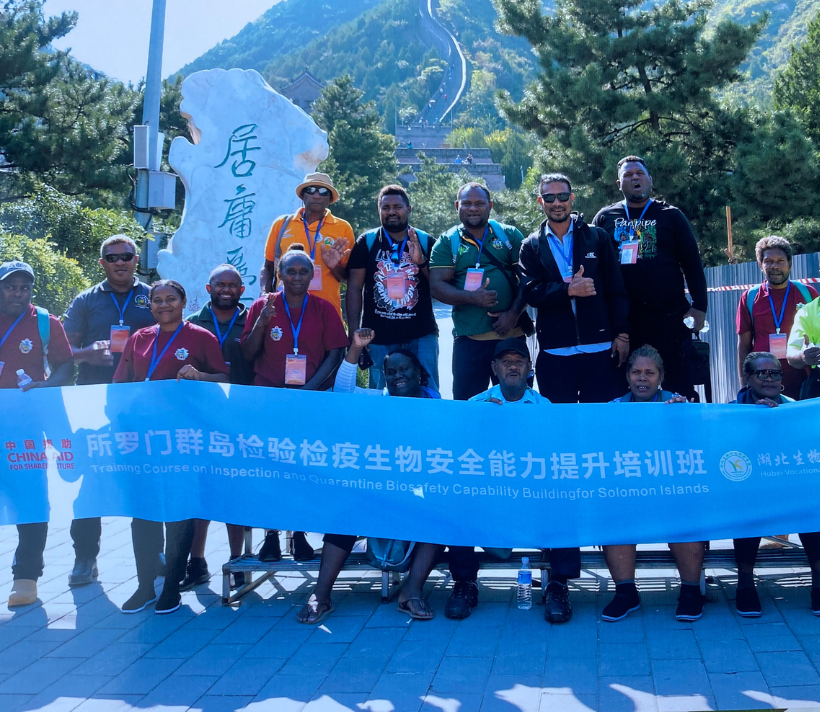
Adrian and other members of the Solomon Island delegation at the Great Wall of China
In September last year, I was given the opportunity by my company to join government officials from the Ministry of Agriculture on a visit to the People’s Republic of China. Together with my colleague Steward, I embarked on a three-week training program focused on inspection and quarantine biosafety. This experience was both a professional milestone and a personal journey of discovery. Alongside our colleagues from the Biosecurity team, CEMA, and representatives from the private sector, I had the privilege of learning from one of the world’s most advanced nations in biosafety practices. The program offered invaluable insights into inspection and quarantine measures, critical tools for safeguarding public health and agricultural integrity.
China immediately struck me as a highly developed country with a vast population, yet one that manages to provide for its citizens through jobs, infrastructure, and social development. What impressed me most was the nation’s transformation from an underdeveloped state into a global powerhouse. By reviewing policies, listening to citizen perspectives, and learning from international experiences, particularly from Europe, China underwent rapid development. Today, the government places strong emphasis on two vital aspects: border security and food security. Beyond governance, I observed a society built on respect, discipline, and cultural pride, where people value their language and traditions deeply.
The lessons I gained from this experience have direct applications to my work. In agriculture, where my company is currently focused, I see opportunities to strengthen collaboration with farmers and expand into broader food security initiatives. Upholding biosafety, inspection, and quarantine measures is essential to ensure the quality of agricultural products, especially for export. Precision and compliance in these areas will not only protect consumers but also enhance the reputation of our exports in international markets.
Several aspects of Chinese society surprised me. The kindness, humility, and hardworking nature of the people stood out in everyday interactions. I was inspired by the way bicycles and scooters were neatly packed along the streets, untouched and respected, a reflection of collective responsibility. Public spaces were orderly, free from drunkenness or loud disturbances, and filled with people diligently engaged in work. The government’s zero-tolerance approach to corruption was particularly striking, and the discipline of young people, who are actively contributing to society rather than idling, offered a sharp contrast to what I often see back home in Honiara.
China’s cultural richness was another highlight of my trip. Visiting landmarks such as the Yellow Crane Tower, the Great Wall, and the Temple of Heaven revealed the depth of history and resilience embedded in the nation’s identity. These sites are not only symbols of pride but also carefully preserved treasures that attract millions of tourists. I also noticed cultural nuances, such as the tradition of placing surnames before given names, which reflects the value placed on family heritage.
Finally, my visit to China was more than a training program; it was a transformative experience. I returned with technical knowledge that will strengthen my professional work in biosafety and agriculture, but also with broader lessons in discipline, respect, and cultural pride. China’s journey of development and its people’s values serve as an inspiration, reminding me that progress is possible when governance, society, and culture work hand in hand.
By Adrain Smith
KPSI Operations